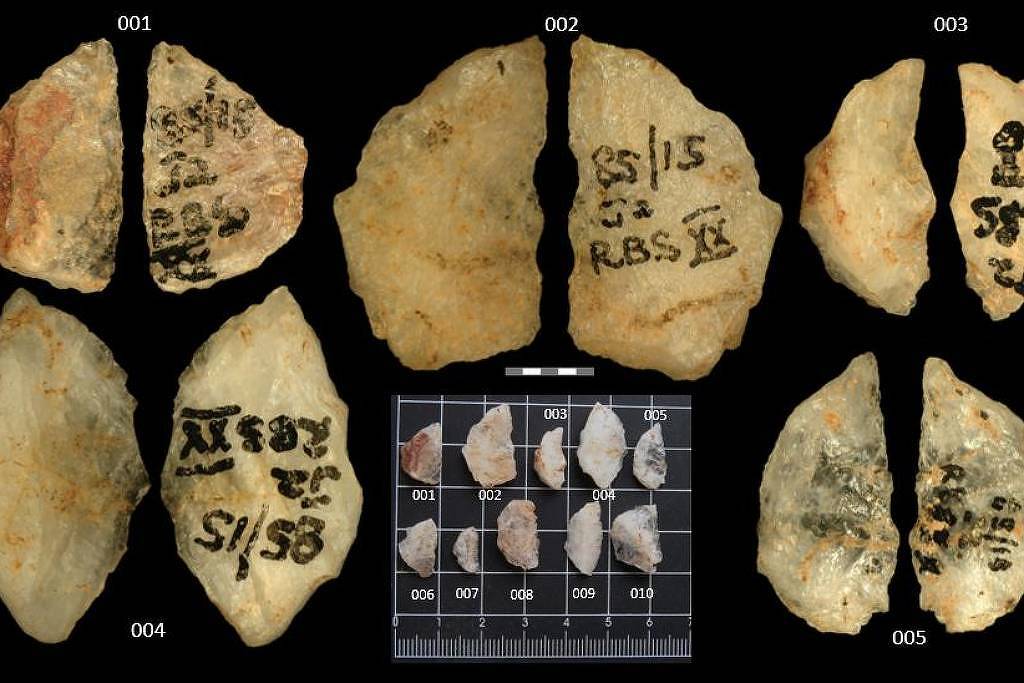

I'm not sure when I first came across the concept of a poison arrow. Maybe it was when reading "The Minotauro", by Monteiro Lobato, which tells the story of the children's first trip from Sítio do Picapau Amarelo to Ancient Greece. Lobato tells how the hero Hercules dipped the tips of his arrows in the blood of the Hydra of Lerna, a many-headed monster that he had just defeated. From then on, no living being struck by Hercules' arrows would escape death. (Spoiler: such efficiency in the art of killing would end up turning against himself). Since then, I started to see poisoned arrows as a kind of very powerful magic – but I had no idea that it could be much older than the heroes dreamed of by the Greeks. Well, now we can be precise: the stratagem adopted by the son of Zeus is at least 60 thousand years old – rounding off, 40 times longer than the interval that separates us from Bronze Age Greece. And, despite the mania that many people still have of attributing all of humanity's relevant inventions to the Hellenic civilization, the technique was created in Africa, the cradle continent of our species, as shown in a study which appeared this week in the journal Science Advances. Arrowheads made of stone and with traces of a plant-based poison were identified by a trio of scientists led by Sven Isaksson, from Stockholm University. The artifacts come from the Umhlatuzana rock shelter, in South Africa, and the degree of preservation of toxic substances is so impressive that stains of the poisonous preparation can still be seen on the surface of the object. Archery technology, in fact, is even older and also has African origins, and a number of examples from the continent, including arrows from Ancient Egypt, had already been identified with traces of poison. The South African find, however, catapults this origin to a very remote moment, even preceding most of the expansion of humans with modern anatomy out of Africa. Chemical analyzes revealed, in the stone points, the presence of bufandrin and epibufanisin, compounds that were also present in much more recent poisoned arrows from the region, 250 years old. Most likely, the source of the substances is the bulbs of the shrub plant. Boophone distichavery common in the region and used for the same purpose by hunter-gatherers in the region. Columns Receive a selection of Folha columns in your email The bulb extract, after drying, acquires a gummy consistency. In small doses, it kills rodents in half an hour; in humans, it can cause nausea, muscle flaccidity, swelling in the lungs, respiratory paralysis and coma. It was probably used to hunt antelope, as the most recent groups in the area did. Let us not lose sight of what all this means from the point of view of the cognitive history of our species. Producing this type of artifact requires: 1) knowledge of the biochemical properties of the flora; 2) technical ability to prepare the extract and apply it to the arrow; 3) planning to shoot the target animal and follow it long enough for the poison to knock it down. And that's just to get to the basics. Tens of millennia ago, in Africa, people with minds as complex as mine and yours discovered this type of magic in the middle of the savannah. LINK PRESENT: Did you like this text? Subscribers can access seven free accesses from any link per day. Just click the blue F below.