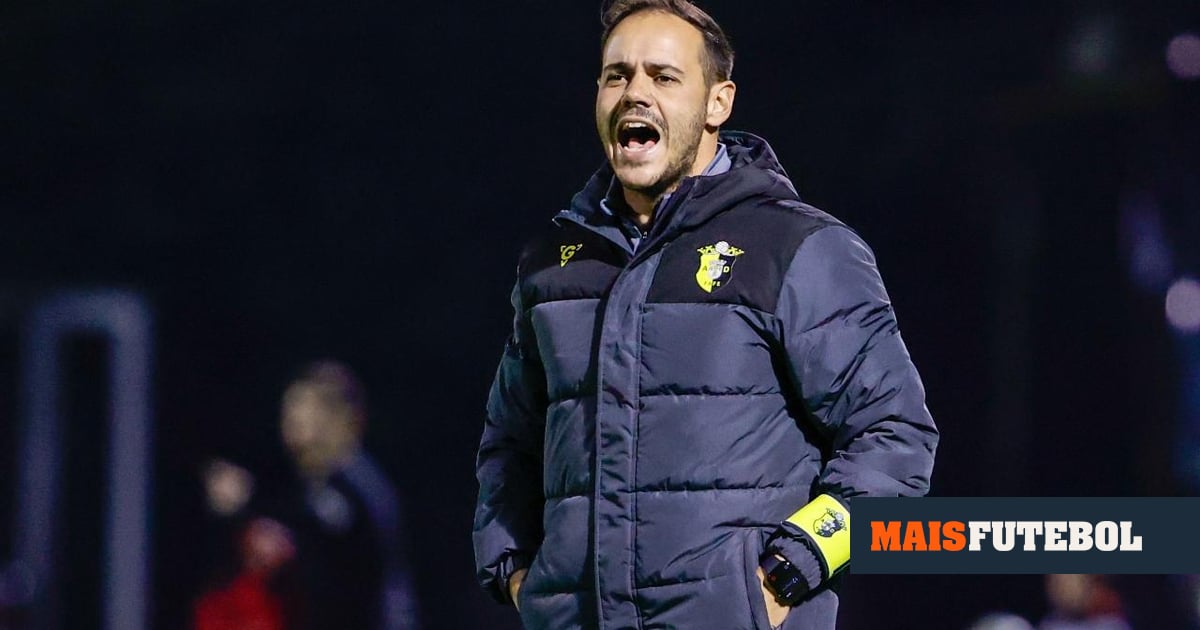
The Associação Desportiva de Fafe is the big sensation of the Portuguese Cup in 2025/26. They are the only League 3 club in the quarter-finals of the premier competition (where they are for the fifth time) and, in the classic Wednesday at Dragão, hosts Sp. Braga (6:45 pm) in a duel from Minho that will have a full house at Municipal de Fafe, in an attempt to reach the semi-finals for the third time. Mário Ferreira, 30 years old, is one of the youngest coaches in the national championships and leads a team that has a decisive January for the main objective of the season: going to the promotion phase of League 3. However, there is also an ambition to continue making history in the Cup. It was precisely with Mário Ferreira's debut that the team recorded their first victory of the season and began their successful journey in the competition: 1-0 in the visit to Oriental, the same result achieved in Évora against Lusitano, after defeating Moreirense (1-0) and Arouca (2-1) in Fafe. Maisfutebol interview with Mário Ferreira, who in this Part III talks about his career as a coach and career goals, José Mourinho as a reference and also his relationship with Derlei, former footballer and current president of SAD at AD Fafe, who manages professional football in Minho. Was being a coach something you always wanted? And what goals do you have in this profession? MF – Yes, he woke up very early. He still played for Leixões' under-19s. I was a group player, I liked the spirit of solidarity, companionship and I created many bonds of friendship that I still have today. Like André, for example. And I was always loyal to the coach's ideas. In other words, I was never one to fight back and ask for explanations for not playing and from an early age I wanted to enter the technical area and since I was 18/19 years old, I asked Pedro Correia, who was the coach of Leixões and is now the sports director of AVS, to accompany one of the youth teams. I started as assistant for the under-13s and then continued on. I still spent a year as a senior playing for Leça, but I was always linked to Leixões in training, then I was Manuel Monteiro's assistant for a few years until I became head coach. I started at Coimbrões, was at Salgueiros, had a spell at Estrela da Amadora and returned to Fafe. But ambition is whatever it has to be, whatever destiny draws. I believe that work is important, obviously I have dreams like everyone else, I would like to have a beautiful career, it's whatever the universe has to give. In Portugal? Abroad? If there is something specific you think… MF – A personal dream was to hear the Champions League anthem, regardless of the tie. I think all of us coaches dream about this. Football is very global, the market is very open to everyone, good football has been played in various parts of the world, so whatever comes my way, I think it will be positive. And by the time you played a senior year at Leça, after training at Senhora da Hora and Leixões, were you already sure that you wanted to be a coach? MF – Yes, at Leça I still played around 15 games. I played for Leça and was already assistant to Leixões' under-16s and I decided, at the end of that year, to give up, because I was also studying, I had a huge burden between college, playing and training and at the time I opted for training, perhaps because it was linked to college and I gave up playing. I had to choose a path and I chose the technical part. Weeks before arriving at Fafe, he had left Estrela, speaking of personal reasons... MF – We, coaches, when we start the training part, we always have to be aware that leaving home is something that can happen and we can go for 50 kilometers, but we can also go for 300 or 400 and at the time, when I went to Estrela in January I left behind a wife and two young children and I knew perfectly well the risk I was going to take, it was a bet, deep down, on developing my skills as a coach, but leaving behind the growth of my children, being with my family and the truth is that it got to a point where I had to decide: either be with my family, or continue with that. It was at the moment that I thought I had to do it and by chance it turned out well that this door was opened in Fafe. This season at Estrela he had experience in the League as José Faria's assistant. Even though it was just a few months, how important was it? MF – It was very important. We know different realities, we played against Al Nassr [ndr: na pré-época]teams from the II League, I League, training games and official games obviously, but what made me grow the most was living and sharing with other coaches. Because currently we look at League 3 clubs and see five, six, 20 staff members. In the League, there are normally around 40 to 50 people, because there are departments for everything and anything: analysis, marketing, physiotherapy, doctors. Sharing experiences and knowledge with all of them was what made me grow the most and was important to me. In his career as a coach he passed through AD Oliveirense, at a turbulent time when even players experienced difficulties… MF – (laughs) it was, it was. What was that period like? MF – These are moments that we have in this life that are very funny. We arrived at a club where a sporting director wanted to make Oliveirense a SAD and made salary and contractual promises that were too big for reality. Didn't comply. And I say it was funny because there was always hope that it would be fulfilled, but it never was. Obviously it was sad, we had many families in need, in need of the salary, we look back and I'm sure that even the players look back and remember it as a negative and bad phase of football. Having people like those in football leaves a negative image. I remember perfectly that at the time AD Oliveirense went into insolvency and many of us were left without receiving a cent. Do you have any references as a coach? MF – Yes, I think José Mourinho was a coach who opened doors for many coaches like me, like Vascos [ndr: exemplifica com Botelho da Costa, Seabra…]who did not have a very positive playing career. Recently, the Estoril coach spoke about this and without a doubt, for me, he was and is an excellent coach. Not only for the training and game part, but for the mental part, for the way he communicates. I think it's too high a level. And who is Mário Ferreira outside of coaching? MF – A normal person, 30 years old. I became a father early, I always had the dream of being a father and I have another family dream which is to be a grandfather. I think it must be a feeling, not of duty accomplished, but of seeing the generation growing. And I like doing what most 30-year-olds like, like playing paddle tennis, doing team sports, having dinners, sharing moments with friends, playing pool, Swedish... AD Fafe's SAD currently has Derlei as president. How is your relationship with him? MF – It's very positive. I have to realize that, on the other side, I have a president who won a Champions League, who is almost twice my age, he could be old enough to be my father, there is enormous respect for him. Obviously, this respect always has its limit, but never exceeding that limit, both on my part and on his. Derlei is a humble, peaceful person and the relationship is cordial. He has been a regular presence on the substitutes bench. How do former footballers also talk about football and the team? MF – We are always in contact, we have a close relationship, we talk weekly about the club's day-to-day activities, the needs, because there are always needs. Obviously some are fulfilled, others are not, through his ideas and the structure, but the relationship is close in order to improve AD Fafe.