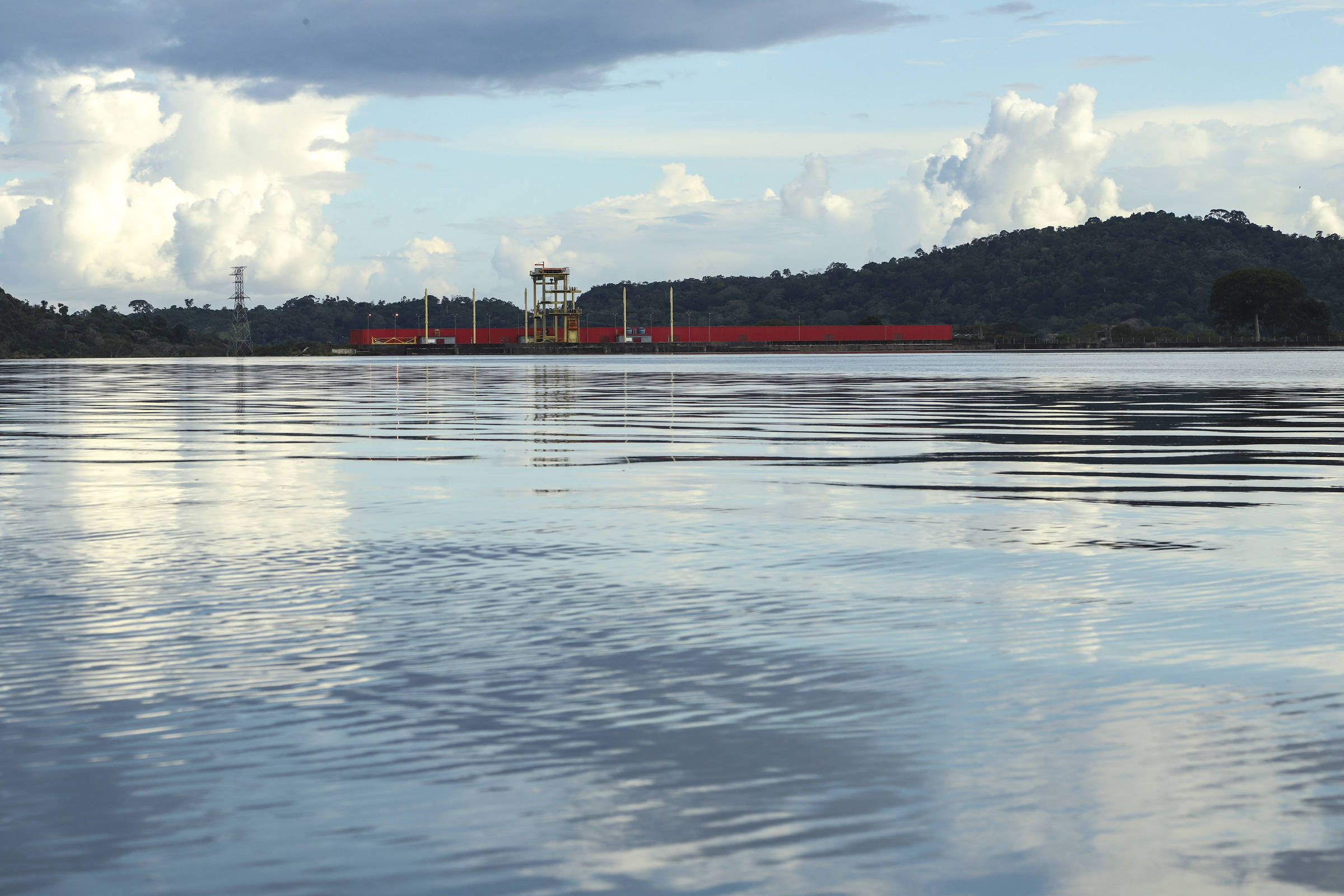
Garrett Hardin explained that "the tragedy of the commons" occurs when individuals, acting rationally and in their own self-interest, deplete or degrade a common (shared) resource, for example, a river, even though they know that degradation is against everyone's long-term interest (Science, 1968). At a celebration of the 25th anniversary of ANA (National Water and Sanitation Agency), I said that avoiding the tragedy of the commons, in the form of unsustainable use of our rivers, was what motivated me to participate in the creation of the body and to become its first president. A couple of years earlier, law 9,433/1997 had been sanctioned, containing general operating principles of the National Water Resources Management System (SNGRH), provided for in the Constitution (art. 21, XIX). It was an important step. However, good laws alone do not change anything. Competent and stable institutions are needed to convert intentions into actions that guarantee the development of a nation, as demonstrated by Douglass North (1993 Nobel Prize in Economics). Over the 25 years, ANA effectively implemented the SNGRH. But it continues to face numerous challenges. I would like to highlight one that seems particularly relevant to me: ensuring that the multiple use of hydroelectric power plant (UHE) reservoirs is carried out with economic rationality. Large reservoirs serve not only to generate electrical energy but also to serve other uses, upstream (upstream) or downstream (downriver), such as: human and animal supply, irrigation, navigation, ecotourism and leisure. The operational rules of a HPP include upper and lower limits imposed on the water level in the reservoir itself and in the downstream section of the river, to ensure that energy generation does not compromise other multiple uses and environmental balance. At the same time, there are also limits to the outflow (the amount of water that leaves the dam). Additionally, to avoid excessive level fluctuations downstream, the effluent flow — and, therefore, the energy production — is not allowed to vary abruptly. At first glance, these restrictions appear to be in line with society's interests. But the analysis needs to be deeper. For example, years ago the Sobradinho reservoir (São Francisco River) had to release at least 1,300 cubic meters per second to maintain a minimum water level in the downstream stretch of river. As this was an exaggerated discharge, the reservoir almost emptied and the thermal plants had to be activated to avoid rationing.The problem was poorly stated. The restriction, which was not a minimum flow rate, but a minimum level, could have been relaxed with solutions that would cost much less than the fuel for thermal plants. The electricity bill would be lower. Generalizing: if a restriction costs electricity consumers $100 and relaxing the restriction costs other water users $30, how about finding a way to channel $50 from the first group to the second and everyone wins? This is what I proposed at a recent event at the Ministry of Mines and Energy, within the scope of the "Strengthening the Governance of the Integrated Management of Reservoirs in the Electric Sector" program. Columns Receive a selection of Folha columns in your email LINK PRESENT: Did you like this text? Subscribers can access seven free accesses from any link per day. Just click the blue F below.